Ropa Vieja vs. Vaca Frita: What’s the Difference?
If you’ve spent any time scrolling a Cuban restaurant menu, you’ve probably hit this exact wall: ropa vieja vs vaca frita are both listed as “shredded beef,” both come with rice and beans, and both photos look… kind of the same? People ask about this constantly it’s a common enough question that it shows up in comment sections and even casual social posts asking “which one would you choose?”
Here’s the short answer: they start from the same pot, then go in completely different directions. Ropa vieja stays in the sauce and becomes a soft, tomato-braised stew. Vaca frita leaves the sauce behind entirely and gets pan-fried into something crispy and citrus-bright. Same cut of beef, same first step, totally different dish by the time it hits your plate.
Below: the real difference ropa vieja vs vaca frita (with the history behind why), a side-by-side comparison, and two complete recipes so you can make both and taste it yourself.
The Short Version
| Name means | “Old clothes” (from the shredded, rag-like look) | “Fried cow” |
| Texture | Soft, saucy, falls apart | Crispy on the edges, chewy-tender inside |
| Cooking method | Boiled, shredded, then simmered in tomato sofrito | Boiled, shredded, marinated in citrus, then pan-fried |
| Sauce | Tomato-based, with peppers, onions, cumin, oregano | No sauce — dry-fried with onions |
| Flavor profile | Savory, slightly sweet, vegetable-forward | Garlicky, sour-citrus, salty and beef-forward |
| Best paired with | White rice (soaks up the sauce) | Black beans, or as a sandwich/tostón topping |
| Origin | Traced to Spain, via Sephardic Jewish Sabbath cooking traditions | Developed by enslaved cooks in Cuba and the Canary Islands using tough, inexpensive cuts |
| Harder to mess up? | Yes — very forgiving, hard to overcook once it’s saucy | A little trickier — needs a hot enough pan to actually crisp, not just steam |
Why They Taste So Different, Even Though They Start the Same Way
Both dishes begin with the exact same move: a tough, inexpensive cut — usually flank steak — gets boiled low and ropa vieja vs vaca frita slow in salted water until it’s tender enough to pull apart with two forks. That’s it. That’s the entire overlap.
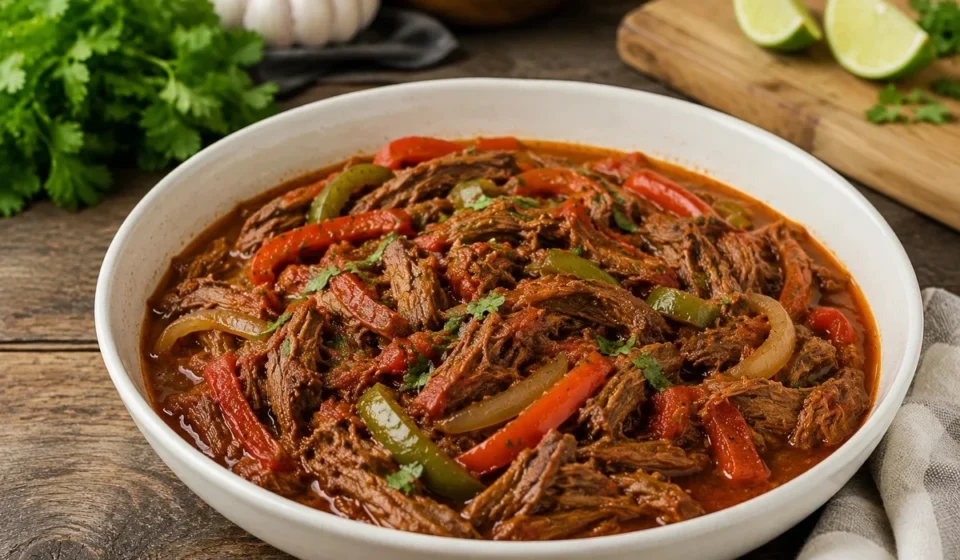
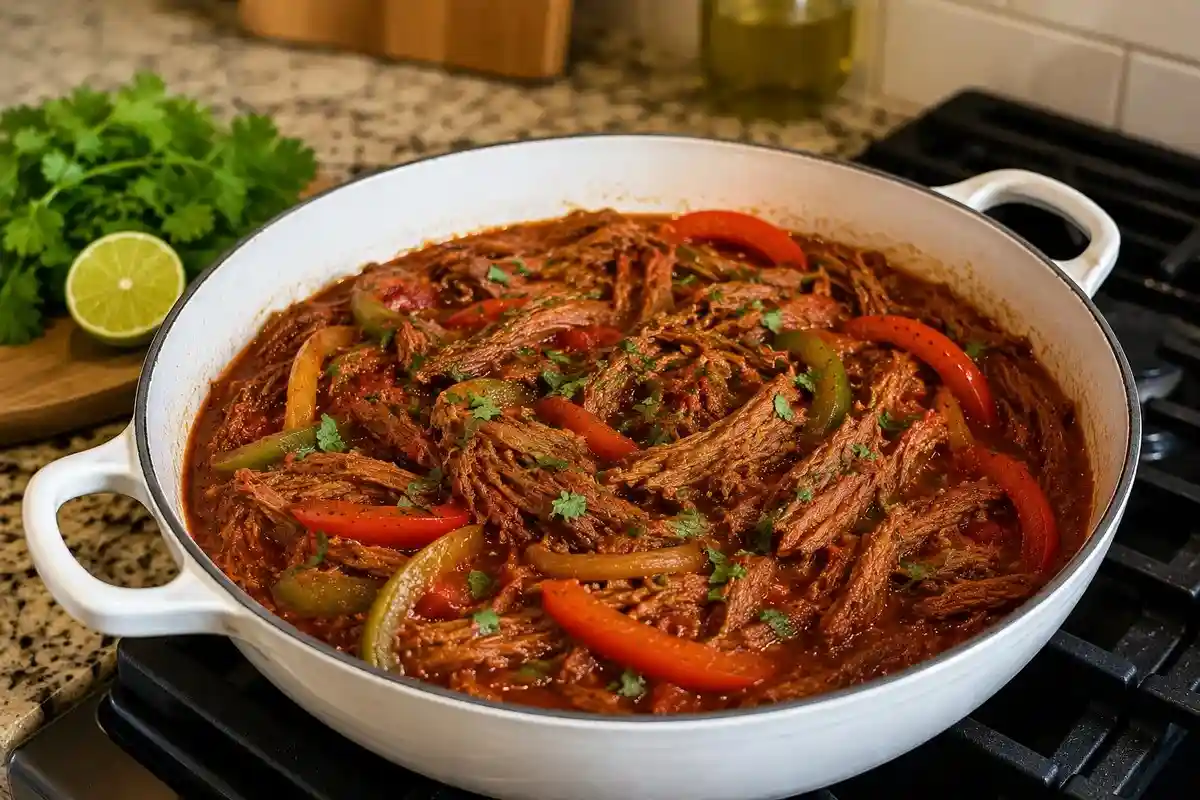
Ropa vieja goes back into the pot after that not into water, but into a sofrito-based sauce of tomatoes, onions, bell peppers, garlic, cumin, and oregano, and simmers until the shredded beef has fully soaked the sauce back up. The “old clothes” name comes from exactly what it sounds like
The loose, ragged strands of meat resemble a pile of old fabric. It’s genuinely one of the more forgiving dishes in Cuban cooking — the longer it sits in the sauce, the better it gets, which is why it’s a common make-ahead and leftovers dish.
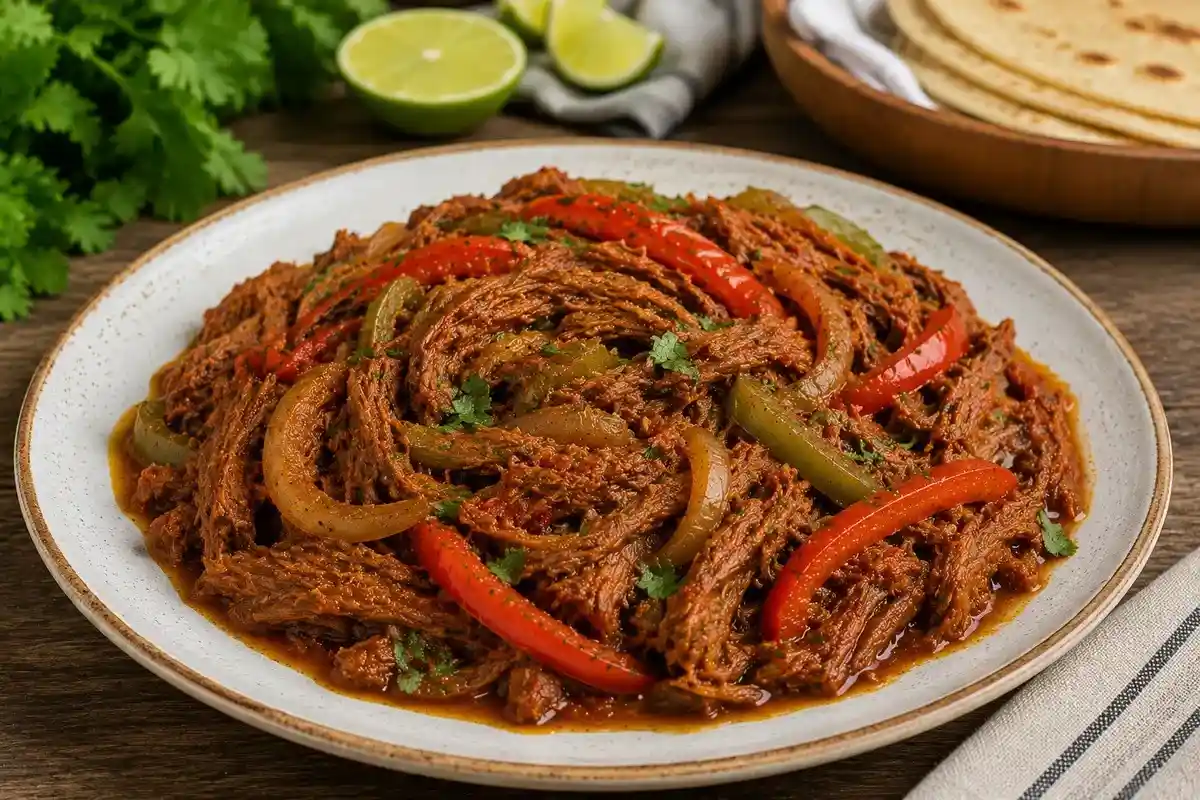
Vaca frita takes the shredded beef in the opposite direction. Instead of going back into liquid, it gets marinated in a simple mix of lime juice, garlic, and salt, then thrown into a hot, oiled pan and left mostly undisturbed so the edges can actually crisp and brown. There’s no sauce at all.
The name is blunt for a reason — “fried cow” — and the dish’s roots trace back to enslaved cooks in Cuba and the Canary Islands, who were given the cheapest, toughest cuts of meat and had to find a technique that made them worth eating. Frying transformed a tough scrap cut into something genuinely craveable, and it’s stuck around for exactly that reason.
So the split really comes down to one decision point: does the meat go back into a sauce, or into a hot dry pan? Everything else texture, flavor, how it’s served follows from that one fork in the road.
Which One Should You Make First?
- Never made either? Start with ropa vieja vs vaca frita. It’s more forgiving — there’s no risk of it drying out or steaming instead of crisping, since it’s meant to be saucy.
- Want something that feels more like a “wow” dish for guests? Vaca frita has better visual drama (crispy edges, that fried-onion smell) and works well as a centerpiece.
- Meal prepping? Ropa vieja reheats better and tastes even better the next day. Vaca frita is best fresh, right off the pan, while it’s still crispy.
Ropa Vieja Recipe
Serves 6 · Prep 15 min (plus 2 hrs to tenderize the beef) · Cook 40 min
Ingredients
- 2 lbs flank steak, cut into large pieces
- Water, enough to cover the meat
- 1 tsp salt
- 3 tbsp olive oil
- 1 medium yellow onion, sliced
- 1 green bell pepper, sliced
- 1 red bell pepper, sliced
- 4 cloves garlic, minced
- 8 oz tomato sauce
- 1/2 cup dry white cooking wine (vino seco) — sub: dry sherry, or omit and add an extra squeeze of lime
- 1 tsp ground cumin
- 1 tsp dried oregano
- 1 bay leaf
- Salt and pepper to taste
Instructions
- Tenderize the beef. Place the flank steak in a large pot, cover with water, add 1 tsp salt, and simmer on medium-low for about 2 hours, until it shreds easily with a fork. (Pressure cooker: about 40 minutes.)
- Shred. Remove the beef, let it cool slightly, then shred it into long strands using two forks. Set aside — don’t discard the cooking liquid yet, you may want a splash of it later if the sauce reduces too far.
- Build the sofrito. In a large skillet, heat the olive oil over medium heat. Add the onion and both peppers, and sauté 3–4 minutes until softened. Add the garlic and cook 30 seconds more, until fragrant.
- Make the sauce. Stir in the tomato sauce, wine, cumin, oregano, and bay leaf. Simmer 15 minutes, stirring occasionally, until slightly thickened.
- Combine. Add the shredded beef to the skillet, stirring to coat every strand in sauce. Cover and simmer on low for 10–15 minutes, until the beef has absorbed most of the liquid. Taste and adjust salt and pepper.
- Serve over white rice, with black beans and fried plantains on the side.
Vaca Frita Recipe
Serves 4 · Prep 10 min (plus 2 hrs to tenderize + 30 min to marinate) · Cook 15 min
Ingredients
- 2 lbs flank or skirt steak
- Water, enough to cover the meat
- 1 tsp salt
- Juice of 2 limes
- Juice of 1 orange (or 1 tbsp white vinegar if sour orange isn’t available)
- 4 cloves garlic, minced
- 1 tsp ground cumin
- Salt and pepper to taste
- 3 tbsp vegetable or olive oil, for frying
- 1 large white onion, thinly sliced
Instructions
- Tenderize the beef. Same as above: cover the steak with water, add salt, and simmer 1.5–2 hours until fork-tender. Remove and shred into long strands.
- Marinate. In a bowl, combine the shredded beef with lime juice, orange juice, garlic, cumin, salt, and pepper. Let it sit at least 30 minutes (up to a few hours in the fridge) — this is where all the brightness comes from, so don’t skip it.
- Fry — the part that actually makes it “vaca frita.” Heat oil in a large skillet over medium-high until it’s shimmering-hot. Add the marinated beef in a single layer, pressing it down slightly. Don’t stir it for the first 3–4 minutes — this is the step people rush, and it’s the difference between “crispy” and “just warmed shredded beef.” Let it sit undisturbed so the bottom actually browns.
- Add the onions. Once you see good browning on the beef, add the sliced onions to the pan and toss everything together. Cook 3–5 more minutes, until the onions have softened and picked up some color and the beef has crispy edges throughout.
- Serve immediately, while it’s still crispy with black beans, over rice, or piled into a sandwich.
FAQ (ropa vieja vs vaca frita)
Which one is more authentic?
Both are equally authentic — they’re just different dishes with different histories. ropa vieja vs vaca frita likely has roots in Spain (via Sephardic Jewish cooking traditions) before arriving in Cuba through colonization. Vaca frita developed independently in Cuba and the Canary Islands, largely credited to enslaved cooks working with the cheapest cuts of meat available to them.
Which one is easier for a beginner?
ropa vieja vs vaca frita It’s more forgiving since it finishes in a sauce, there’s less risk of drying it out or under-crisping it. Vaca frita has one technical step (letting the meat sit undisturbed in a hot pan) that takes a try or two to get right.
Can I use the same cut of beef for both?
Yes flank steak is the standard for both dishes, and the first step (boiling and shredding) is identical. You genuinely could tenderize a big batch of flank steak and split it into two smaller portions to make both dishes at once.
Is vaca frita spicy?
No — neither dish is spicy. The heat in vaca frita, if you can call it that, is really just the sharpness of raw garlic and citrus, not chili heat. Cuban food in general leans savory and citrusy rather than spicy.
Can I make either one ahead of time?
ropa vieja vs vaca frita yes — it actually improves overnight in the fridge as the beef keeps absorbing sauce. Vaca frita is best made fresh; the crispy texture fades if it sits, though the shredded, marinated beef can be prepped ahead and fried right before serving.
How do you pronounce “ropa vieja”?
ROH-pah vee-EH-hah. It’s Spanish for “old clothes” — a reference to how the shredded beef looks like torn, ragged strands of fabric.
What does “ropa vieja” translate to in English?
Literally “old clothes.” It sounds like an odd name for a dish, but it’s describing the visual — loose, shredded strands of beef that resemble a pile of worn fabric, not the flavor or ingredients.
Is ropa vieja healthy? How many calories does it have?
Ropa vieja is a lean-protein-forward dish — flank steak is relatively lean, and the sauce is vegetable-based rather than cream- or cheese-based. ropa vieja vs vaca frita A typical serving runs roughly 300–400 calories depending on portion size and how much oil is used, making it a moderate choice compared to heavier Cuban dishes like fried pork or cheese-stuffed sides. As always, the sides (rice, beans, fried plantains) add more to the plate than the meat itself.
What’s the best cut of meat to use?
Flank steak is the traditional choice for both dishes, prized because its long muscle fibers shred into those signature ragged strands. Skirt steak is the most common substitute and works well for vaca frita especially. Chuck roast can work in a pinch, but it shreds shorter and less stringy, so it won’t have quite the same texture.
What should I serve with ropa vieja or vaca frita?
White rice is the classic base for either dish, with black beans (or moros y cristianos, rice cooked with black beans) on the side. Maduros (sweet fried plantains) or tostones (crispy green plantains) round it out. ropa vieja vs vaca frita specifically, it’s also common to serve it over rice with a simple avocado-onion salad alongside for something fresh and acidic to cut the richness.