

Cuban Congrí (Moros y Cristianos): Black Beans and Rice Done Right
cuban congri is rice and black beans cooked together in the same pot, so the rice turns a deep grayish-brown and picks up all the flavor of the beans as it cooks. It’s a staple on Cuban tables, and it’s also one of those dishes with two names, which trips people up more than you’d expect.
Congrí or Moros y Cristianos, What’s the Real Difference?
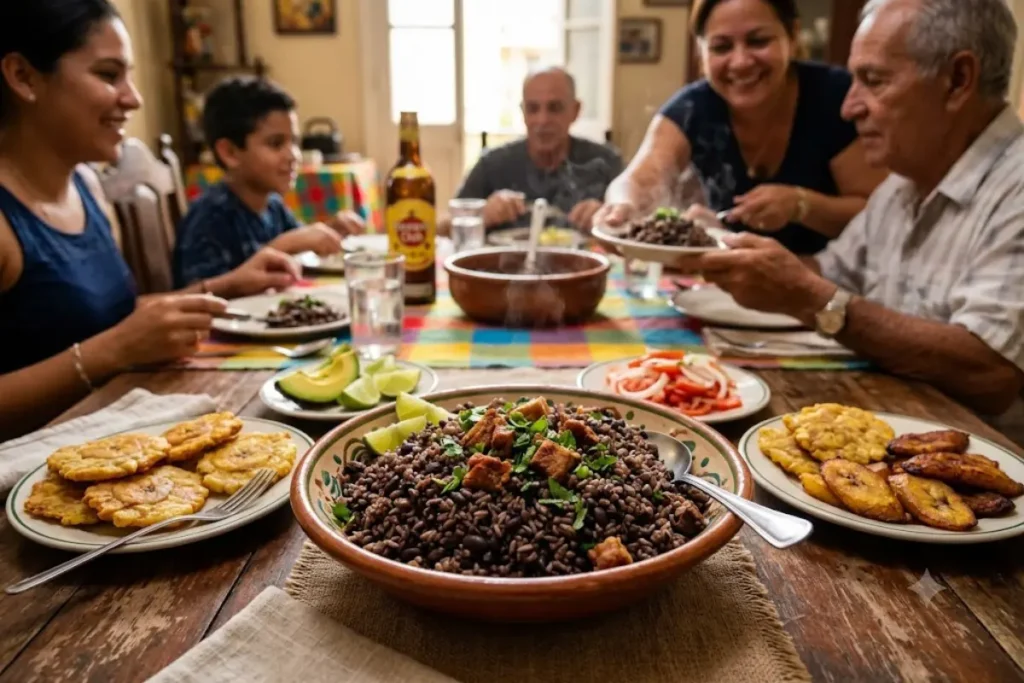
Both names get used for the same basic dish today, but they didn’t start out meaning exactly the same thing. cuban congri comes from eastern Cuba, Oriente, and traditionally used red or pink beans. Moros y Cristianos is the Havana and western Cuba name, and it traditionally means black beans specifically, the name itself is a reference to the dark beans and white rice sitting together, “Moors and Christians.”
These days, most Cuban home cooks use both names loosely for the black beans and rice version, and you’ll hear cuban congri used for black beans just as often as red beans depending on the family and the region. If you see a recipe titled either way calling for black beans, it’s the same dish you’re looking for.
cuban congri Recipe
Serves 6 · Prep 10 minutes (plus time to cook the beans if not using canned) · Cook 30 minutes
Ingredients
- 2 cups white rice
- 1 can (15 oz) black beans, with their liquid, or 2 cups cooked black beans with about 1 cup of their cooking liquid
- 3 cups water (adjust down if using the bean liquid)
- 3 tbsp olive oil
- 1 small onion, diced
- 1 green bell pepper, diced
- 3 cloves garlic, minced
- 1 tsp cumin
- 1 bay leaf
- Salt and pepper to taste
- Optional: a small piece of bacon or salt pork, diced, for extra flavor
Instructions
- In a large pot, heat the olive oil over medium heat. Add the onion and bell pepper, cook until softened, about 4 minutes.
- Add the garlic and cook 30 seconds more, until fragrant. If using bacon or salt pork, render it here before the vegetables instead.
- Add the black beans along with their liquid, the water, cumin, and bay leaf. Bring to a simmer.
- Stir in the rice, then reduce heat to low and cover.
- Cook for 18-20 minutes, without lifting the lid, until the rice has absorbed the liquid and is tender.
- Remove from heat, let it sit covered for 5 minutes, then fluff with a fork. Remove the bay leaf, taste, and adjust salt.
What to Serve With Congrí
Congrí is a side dish, built to sit next to something else. It pairs naturally with ropa vieja, roast pork, or vaca frita, and a side of tostones or maduros rounds the plate out.
Common Questions
What is congrí made of?
Rice and black beans cooked together in the same pot, along with sofrito-style aromatics, onion, pepper, garlic, and usually cumin. The beans’ liquid is what gives the rice its color and most of its flavor.
Is congrí the same as moros y cristianos?
Functionally, yes, in most kitchens today. Historically, congrí leaned toward red beans in eastern Cuba while moros y cristianos meant black beans in the west, but the two names are used interchangeably now, especially outside Cuba.
Can I make congrí with canned beans?
Yes, and most home cooks do. Just don’t drain the can, the liquid is doing real work here, it’s part of what colors and flavors the rice.
What’s the difference between congrí and plain black beans and rice served separately?
Congrí cooks the rice directly in the bean liquid, so every grain picks up flavor and color. Beans and rice served as two separate components on the plate is a different, simpler approach, more common in quick weeknight cooking than the traditional one-pot version.
Can I make congrí in a rice cooker or Instant Pot?
Yes. For a rice cooker, sauté the aromatics separately first, then combine everything in the rice cooker and run it on the regular white rice setting. For an Instant Pot, use the rice/multigrain setting with the same liquid ratio, and let it release naturally for about 10 minutes before opening.
Is congrí the same thing as congrio?
No, that one’s worth clearing up. Congrio is a type of eel-like fish eaten in Chile and Spain, completely unrelated to this dish beyond the similar-sounding name.